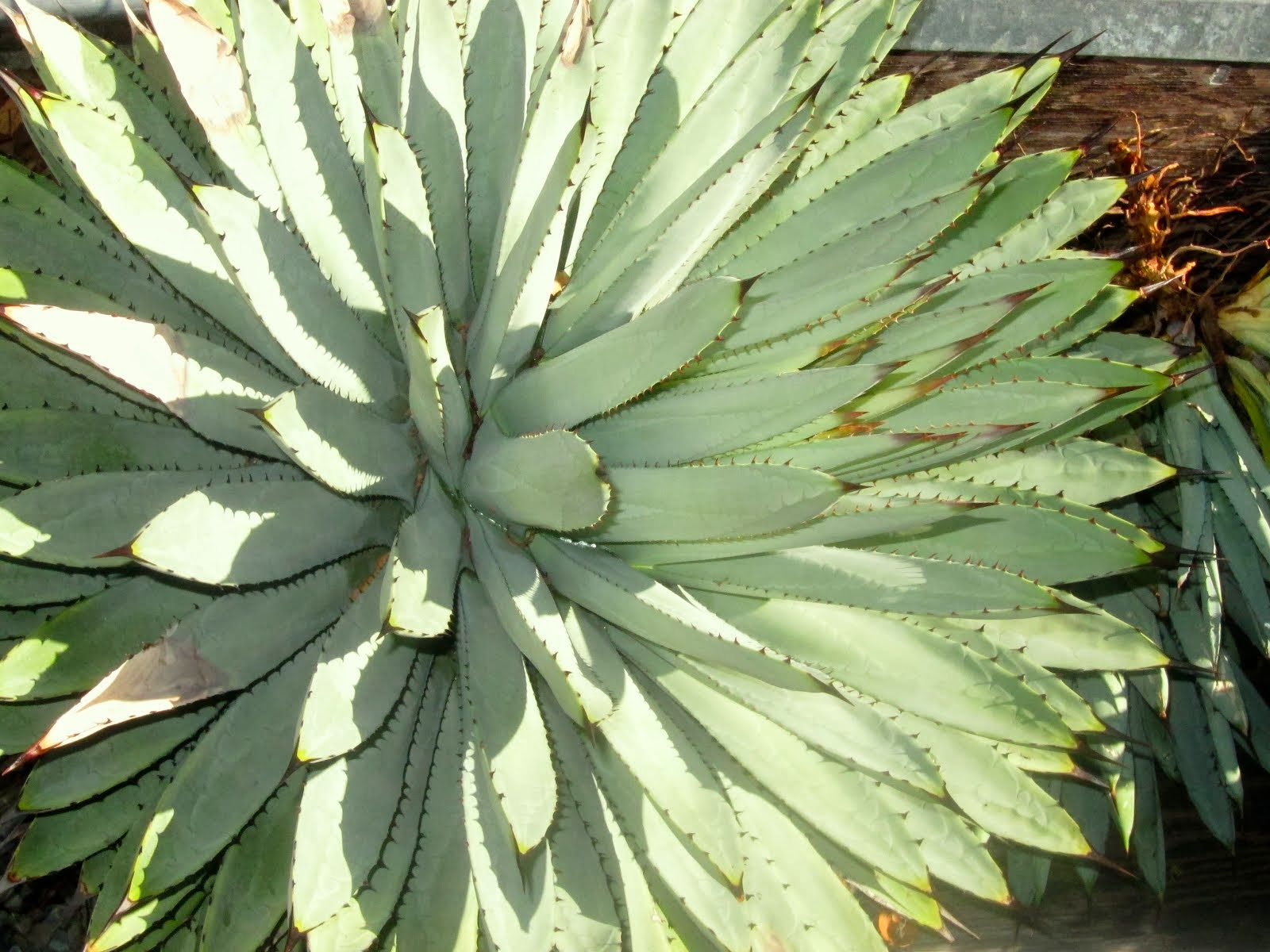
Landscape Cacti and Succulents Nursery
Ordinarily, every day that the UC Botanical Garden is open a choice selection of plants from our propagation area is available in the entry plaza. Many of the plants are vegetative divisions from UC Botanical Garden accessions. And as we always want to remind you, our plants are raised sustainably in exterior exposure by dedicated volunteers. However, currently we do not have sufficient stock to maintain the entry plaza sales area. We sold ourselves out!
Because of the great success of the April 2014 Spring Plant Sale our stock is greatly reduced and we are busy "growing" in the Landscape Cacti and Succulents propagation area located across the street from the garden entrance. After the Garden's Fall Plant Sale we will again to open for sales on the free first Thursday of the month from 10:30 to 1:00. We will be offering competitively priced one and two-gallon specimens and huge deals in three and five-gallon cans--one of the best reasons to come across the street!
Cacti and Succulents in Palm Springs

Nursery Availability 2014
*Items listed are subject to prior sale, and as stated above, this material will be available in the fall
Agave Americana var. medio-picta
Agave attenuata
Agave bovicornuta
Agave bracteosa
Agave celsii 'Nova'
Agave colorata
Agave colorata x. A. bovicornuta *
Agave colorata 'Supreme'
Agave cornelius
Agave cupreata
Agave Ferdinandi-Regis
Agave filifera
Agave gentryi (glaucous blue form)
Agave gentryi cv 'Jaws'
Agave guadalajarana
Agave guadalajarana
Agave guadalajarana 'Leon'
Agave macroacantha
Agave Montana
Agave obscura
Agave ovatifolia
Agave parrasana
Agave parryi huachucensis
Agave parryi var. parryi
Agave salmiana, var. ferox
Agave schottii
Agave striata
Agave toumeyana subsp. toumeyana
Agave vilmoriniana
Agave weberi
Agave xylonacantha
Aloe cameronii
Aloe comptonii
Aloe lineata
Aloe maculata
Aloe nobilis
Aloe petricola
Aloe plicatillis
Aloe rupestris
Dasylirion wheeleri
Dyckia hybrids
Cleistocactus tupizensis
Echinopsis chiloensis
Echinopsis hystrichoides
Echinopsis terscheckii*
Echinopsis sp.
Ferocactus sp.
Ferocactus gracilis *
Ferocactus latispinus *
Ferocactus pottsii *
Mammillaria sphacelata viperina
Opuntia cylindrica cristata
Opuntia variegata
Oreocereus celsianus
Oreocereus hempelianus *
Oreocereus trolli
Puya, various
Trichocereus grandiflorus hybrids
Yucca, various
* = potted 2/2/2014
Cacti and Succulents Care
You may wish to acclimatize your new plants by keeping them in their pots for a while and moving them around to test light and moisture conditions in your garden. When your new cacti or succulents are ready to be planted in the ground, be sure to give them adequate drainage by providing a mix of 50% pumice or 1/4" sharp rock and 50% native or potting soil (preferably with organic fiber and loamy sand as ingredients, but no peat). Good drainage can be achieved either by digging down ±18" into native soil and mixing in rock or building up from the ground line with mounds of new soil with mixed in rock. Planting on slopes also greatly improves drainage. With well draining soil, cacti and succulents are easy to care for and drought resistant! The best time to transplant cacti and succulents is early during the dry months when their roots are actively growing. Avoid any supplemental irrigation during the winter. Because we grow all of our stock outdoors, most of what we sell is very frost tolerant. However, a few species will show some damage after multiple days below freezing. If prolonged frost is forecast for your area drive tall garden stakes around sensitive plants and throw a sheet over them. Even with leaf die-back, your plants should recover with warmer weather. Cacti and succulents are tough!
Plants in Containers:
Your plants will also thrive in larger decorative pots, especially if you water them slightly more frequently during hot weather. Plants in pots will benefit from 1/4 strength balanced liquid organic fertilizer at watering time during their growing season (our California dry months) as well as fresh soil mix every two years. More inorganic material in the soil mix such as horticultural sand and pumice will extend the life of soil in pots, but might require some fertilizer during the growing season. Avoid fertilizing late in the growing season to allow plants to harden off before the cold arrives.
Keep your UCBG plant labels so that you can "Google" the scientific names to learn more about their native environments temperature, light and water requirements!